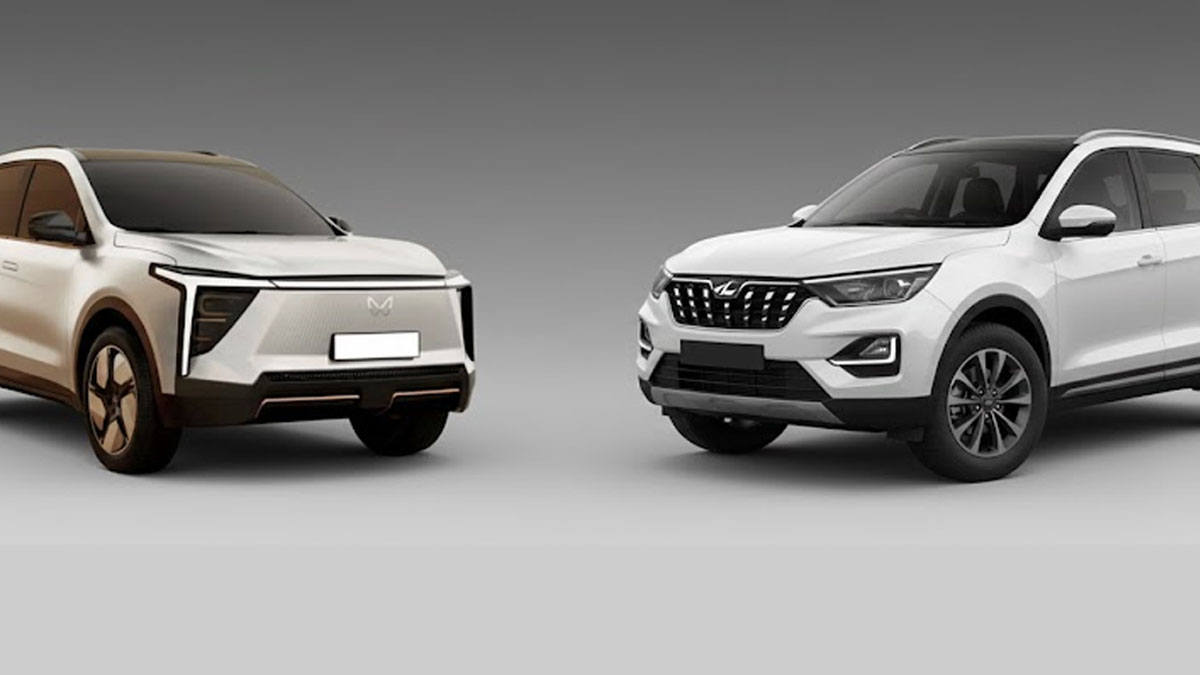
Mahindra XEV 9e vs XUV700 : Mahindra is launching two flagship SUVs in India that couldn’t feel more different — yet both carry the same family DNA. The all-new XEV 9e (earlier shown as XEV 9S) is the brand’s bold leap into premium electric mobility, while the XUV700, already a bestseller since 2021, keeps getting better with petrol and diesel power.
For the first time, buyers with a ₹25-35 lakh budget have to choose between a futuristic electric coupe-SUV and one of India’s most loved traditional SUVs. The decision isn’t just about money — it’s about how you want to drive in 2025 and beyond.
Design: Sci-Fi Concept vs Confident Muscle
The XEV 9e looks like it drove straight out of a 2030 showroom. Sharp C-shaped LED headlights, a completely closed front (no grille needed), flowing coupe roofline, and glowing Mahindra logo give it an unmistakable electric identity. Automotive designers call this “aero-expressive” styling — it’s built to slice through air and turn heads at the same time.
The XUV700 plays a different game. Its wide chrome grille, strong shoulder lines, and tall stance scream traditional SUV authority. It’s the kind of vehicle that feels instantly familiar and reassuring on Indian roads — premium, but not trying to be from another planet.
Performance: Instant Thrill vs Familiar Punch
Step on the accelerator in the XEV 9e and you’re pushed back instantly — that famous EV torque hits like a wave with zero delay and almost no sound. Early test drives suggest the dual-motor version will sprint to 100 km/h in under 6 seconds, making city traffic and highway merges effortless.
The XUV700 counters with refined 2.0-litre turbo-petrol (200 hp) and 2.2-litre diesel (185 hp) engines that Indian buyers already trust. The diesel, especially, is a long-distance champion — smooth, torquey, and rock-solid at triple-digit speeds on highways.
Range and Running Cost Reality Check
Mahindra claims the XEV 9e will deliver around 450-500 km on a single charge in real-world Indian conditions (the bigger battery pack version). With fast-charging networks growing fast — Ola Electric, Tata Power, and BPCL are adding hundreds of stations every quarter — weekend trips to hill stations or nearby cities are becoming practical.
The XUV700 diesel still rules unlimited travel. You can cover 800-900 km on one tank, and fuel stations are everywhere. Running cost? The electric will be 4-5 times cheaper per kilometre once electricity tariffs and home charging are factored in.
Inside the Cabin: Minimal Tech vs Family Luxury
Slide into the XEV 9e and you’re greeted by a triple-screen dashboard that stretches almost the entire width — think Mercedes Hyperscreen, but Mahindra-priced. Physical buttons are almost gone, materials feel upscale, and ambient lighting changes with driving modes.
The XUV700 fights back with space and comfort. Six-footers sit behind six-footers with room to spare, the seats are plusher for long trips, and you still get physical controls for climate and audio — a blessing on bumpy roads when you don’t want to poke at a touchscreen.
Safety and Features — Both Are Loaded
Both SUVs come with Level-2 ADAS, 360-degree cameras, and 7 airbags as standard on higher trims. The XUV700 already earned a 5-star Global NCAP rating for adults and children. Mahindra promises the XEV 9e’s born-electric platform will match or beat that when tested.
Price and Waiting Period (Expected Early 2025)
- XEV 9e: ₹28-35 lakh (ex-showroom)
- XUV700 top-end: ₹25-28 lakh
The electric will cost more upfront, but many states offer road-tax waivers and lower registration fees that narrow the gap.
So Which One Should You Actually Buy?
Choose the Mahindra XEV 9e if:
- You do most driving in the city or under 200 km a day
- You have home/workplace charging (or it’s coming soon)
- You want the latest tech and love being the first with something new
- Running cost and silent driving matter more than refueling flexibility
Choose the Mahindra XUV700 if:
- You regularly travel long distances or to places without reliable chargers
- You want proven reliability and easier service network today
- You carry a big family or load often
- You simply love the feel and sound of a powerful engine
In 2025 India, neither choice is wrong — they’re just answers to very different questions.