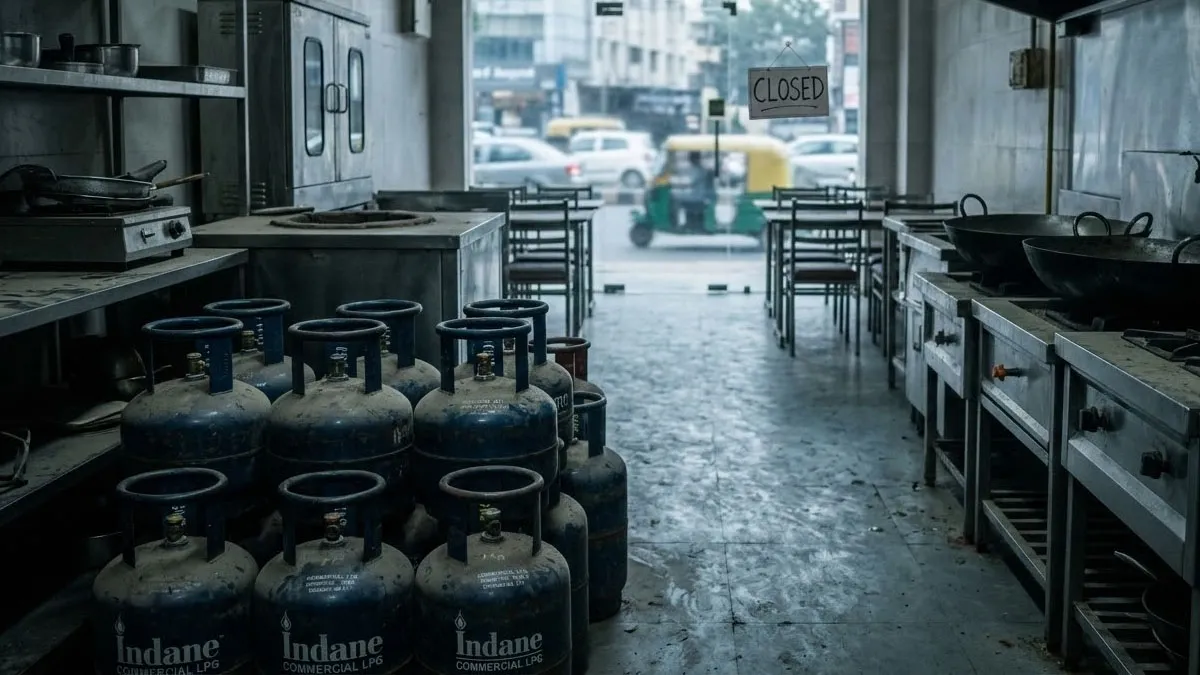
A critical commercial gas cylinder shortage has gripped India’s urban centers as the ripple effects of the West Asia conflict disrupt maritime energy corridors. The Bangalore Hotels Association confirmed that kitchen operations across the city are under threat following a sudden suspension of commercial LPG refills. While some establishments remain functional using existing reserves, the association indicated that a lack of immediate replenishment will force a total shutdown by Wednesday.
The situation in Mumbai is equally precarious, with the Indian Hotel and Restaurant Association (AHAR) reporting that 20% of city eateries have already ceased operations. In high-density areas like Dongri, shutters have been pulled down as managers report having only hours of supply left. Industry leaders anticipate that if the distribution bottleneck persists for another three days, half of the financial capital’s dining establishments will be forced to close.
Government Strategy and Supply Constraints
The Ministry of Petroleum and Natural Gas has directed public sector Oil Marketing Companies (OMCs) to prioritize domestic households over industrial users. This policy shift follows the effective closure of the Strait of Hormuz, a maritime chokepoint through which India traditionally draws nearly 90% of its LPG imports. To manage the current volatility, the government has invoked emergency provisions under the Essential Commodities Act, 1955.
LPG Price and Supply Specifications (March 2026)
| Metric | Domestic Cylinder (14.2 kg) | Commercial Cylinder (19 kg) |
| New Price (Delhi) | ₹913 (Up ₹60) | ₹1,950* (Up ₹115) |
| Booking Gap | 25 Days (Mandatory) | Indefinitely Paused |
| Priority Level | High (Household) | Low (Hospitality/Industry) |
| Stock Status | Available with wait | Critical Shortage |
Regional Comparison: Impact Across Metros
| City | Impact Status | Key Concern |
| Bengaluru | Severe | Shutdown of 3,000+ eateries starting March 11. |
| Mumbai | Critical | 20% already closed; menus shortened to save fuel. |
| Delhi-NCR | High | Zero supply at warehouses; only domestic bookings. |
| Chennai | Moderate-High | Association writes to PM seeking essential status. |
Legislative Background: The Essential Commodities Act
Under the Essential Commodities Act, the Centre possesses the authority to regulate the production and distribution of vital goods during national emergencies. Historically used during the 1973 oil crisis and the 2020 pandemic, these powers now allow the government to force refineries to maximize LPG output and prohibit the diversion of propane or butane for petrochemical use. This prioritizes the 33 crore domestic connections in India over the market-driven commercial sector.