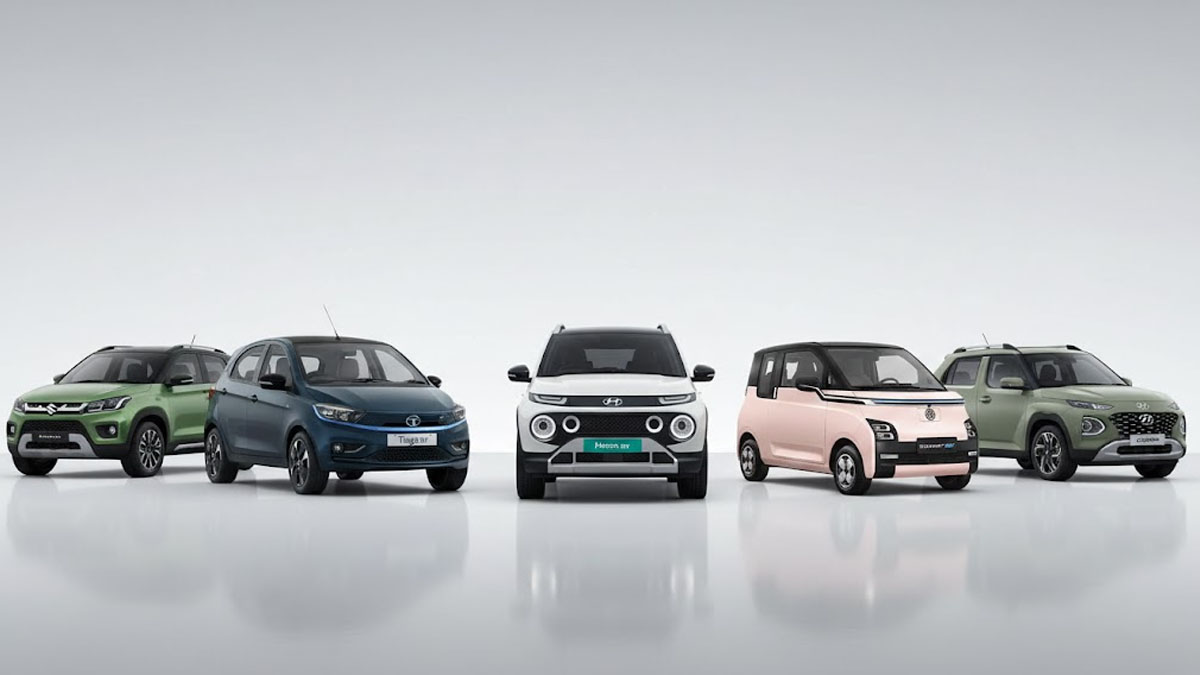
Best Family EVs 2025 India : Electric vehicles are finally becoming realistic options for middle-class Indian families. Until now, most EVs felt either too expensive or too limited in range for daily school runs, grocery trips, and occasional weekend getaways. That’s about to change dramatically in 2025.
A wave of new budget-friendly electric models priced roughly between ₹8–15 lakh (ex-showroom estimates) is coming from trusted brands like Maruti Suzuki, Tata Motors, MG Motor, and Hyundai. These cars are built specifically for Indian roads, traffic, and parking conditions — and they come with nationwide service networks that parents actually rely on.
Here’s why this shift matters: with petrol and diesel prices still high and CNG waiting lists stretching months long, an affordable EV can cut monthly fuel bills by 70–80% while giving families cleaner air and quieter rides.
Maruti Suzuki eVX – The Family SUV Everyone’s Waiting For
Maruti’s first proper electric SUV, the eVX, is easily the most anticipated launch of the year. It’s designed on an all-new “born-electric” platform developed with Toyota, yet it keeps the classic Maruti strengths — huge dealer network, low spare-parts cost, and excellent resale value.
Expect a real-world range of around 400–450 km on a single charge, plenty for city commutes plus a weekend trip to Lonavala or Neemrana without range anxiety. Boot space is generous, rear legroom is adult-friendly, and the cabin feels airy — exactly what growing families need.
Auto experts believe the eVX could become the “electric Alto-to-Innova success story” because Maruti already sells one out of every two cars in India.
Tata Tiago EV and Punch EV – Already Winning Hearts, Getting Better
Tata basically kick-started the affordable EV revolution in India, and the updated 2025 versions of the Tiago EV and Punch EV will raise the bar again.
The Punch EV, in particular, combines the high seating position that Indian buyers love with zippy city performance and a tougher look. The longer-range battery packs should now deliver 300–350 km in real-world conditions (up from today’s ~315 km in the current model). That’s more than enough for school drops, office runs, and even quick highway dashes.
Safety remains a Tata strong point — both cars already scored 4–5 stars in Global NCAP crash tests in their petrol forms, and the EV versions add even more structural rigidity thanks to the battery pack.
MG Comet EV – Tiny Outside, Surprisingly Practical Inside
Think of the Comet as the perfect second car for city families. It’s barely 3 metres long (shorter than a Maruti Alto), yet cleverly seats four adults in reasonable comfort. Parking in crowded markets or narrow society lanes becomes stress-free.
The 2025 version is expected to get a slightly bigger battery, pushing usable range closer to 250–280 km — ideal for families who mostly drive inside city limits. Charging is simple: a regular 15-amp home socket fills it overnight, or a fast charger can add 80% in under an hour.
Many young parents love its quirky design and the “lounge-like” rear seat that feels almost like sitting on your living-room sofa.
Hyundai Casper EV – Cute Looks, Serious Family Credentials
Hyundai’s smallest SUV yet, the Casper EV, will slot neatly between a hatchback and a compact SUV. Its boxy shape maximises interior room, and the upright seating gives excellent all-round visibility — a big plus when kids are climbing in and out.
Early reports suggest a 300+ km range, smooth ride quality, and Hyundai’s legendary after-sales service. Features like six airbags, wireless phone charging, and a sunroof are likely to appear even in mid variants.
Car analysts say the Casper could appeal equally to young couples starting a family and to parents looking for a safe, stylish runabout.
Why 2025 Could Be the Tipping Point for Family EVs in India
- Government incentives (lower GST, state subsidies in Delhi, Gujarat, Maharashtra) will keep prices competitive.
- Home charging is getting easier — most housing societies now allow 3–7 kW wall-box installations.
- Running cost can drop to ₹1–1.5 per km versus ₹7–9 for petrol cars.
- Resale values are improving as battery health check tools become common.
- For the first time, Indian families won’t have to compromise on space, safety, service, or budget to go electric.